

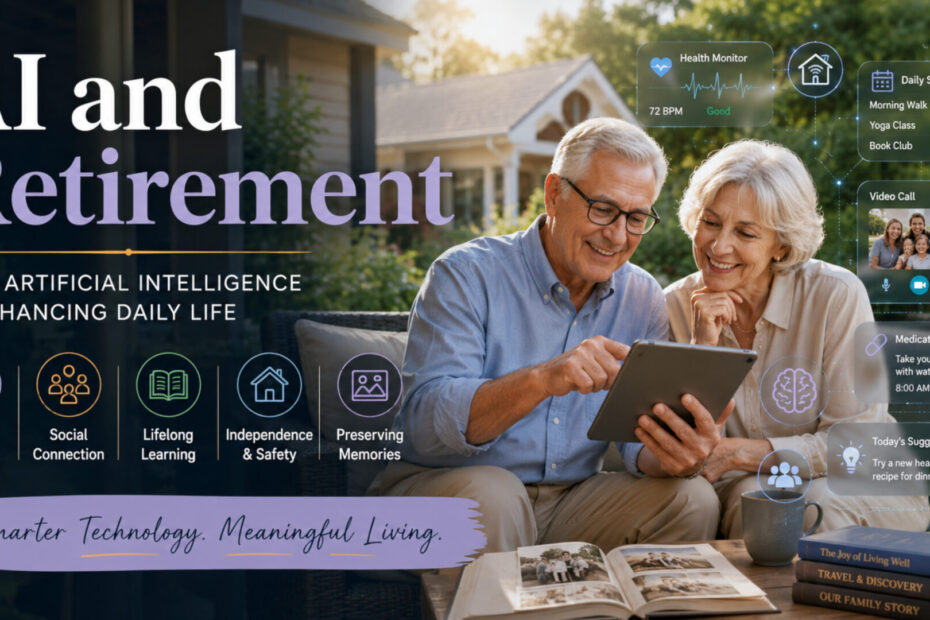
Understanding How AI Is Shaping Purpose, Health, Connection, and Quality of Life in Retirement
Retirement is entering a fascinating new era. Technology continues to influence daily life, and AI is becoming one of the most significant developments affecting how older adults live, learn, connect, and maintain their independence. Many people still associate artificial intelligence with complex computers, futuristic robots, or workplace automation. However, AI is already present in countless everyday tools that support comfort, safety, and convenience.
Yet there is another side to this conversation. AI is increasingly being designed to support human wellbeing, strengthen social connections, improve healthcare outcomes, and help individuals make better-informed decisions throughout retirement. Evidence from current applications shows that artificial intelligence is already contributing to meaningful improvements in the quality of life for older adults.
In our previous articles, Embracing Technology in 7 Transformative Ways That Enrich Retirement Living and Integrating Technology in Geriatric Care: Enhancing Safety, Health Monitoring, and Social Connection, we explored how technology supports modern retirement. This article takes that discussion further by examining how AI is influencing purpose, relationships, health, daily routines, and legacy planning.
Understanding these developments provides valuable insight into how retirement living may continue evolving in the years ahead.
Frequently Asked Questions
Can AI replace human companionship?
No. AI can support communication, provide reminders, and encourage engagement, but meaningful relationships with family, friends, and community members remain essential for emotional well-being.
Is AI difficult for older adults to use?
Many modern AI tools are specifically designed for simplicity. Voice assistants, smart devices, and health monitoring applications often require very little technical knowledge.
Can AI help people remain independent longer?
Many current technologies support independent living through health monitoring, fall detection, medication reminders, and communication tools that improve safety and convenience.

AI and the Search for Purpose After Retirement
Retirement often creates opportunities for reflection and personal growth. Many individuals spend decades building careers, raising families, and contributing to their communities. When professional responsibilities change, questions about purpose and identity naturally emerge.
AI-powered tools are beginning to assist retirees through guided reflection exercises, personalized journaling experiences, and career-to-purpose translation platforms. These systems can help individuals identify transferable skills, uncover interests, and discover meaningful opportunities for volunteering, mentoring, consulting, or creative pursuits.
Some platforms can even analyze professional backgrounds and suggest community roles that align with a person’s experience and strengths. This creates opportunities for continued contribution while maintaining flexibility and personal fulfillment.
The desire for purpose does not disappear with retirement; it often becomes even more important.
Modern Living Flats

Basic Cottages

Modern Comfort Cottages

Comfortable Frail Care

Strengthening Relationships Through AI
Social connection remains one of the strongest contributors to emotional well-being throughout retirement. Family relationships, friendships, community involvement, and meaningful conversations all play a vital role in maintaining quality of life.
AI is already helping older adults remain connected. Smart assistants can schedule video calls, manage reminders, coordinate social activities, and simplify communication with family members. Companion technologies are also being developed to provide conversation, mental stimulation, and daily engagement for individuals who may experience periods of isolation.
Advances in hearing technology are creating additional benefits. AI-enhanced hearing devices can isolate voices in busy environments, making social interactions more enjoyable and reducing communication barriers that sometimes emerge with age.
Technology is often most valuable when it helps people spend more meaningful time with one another.


Creating Structure and Balance in Daily Life
One of the adjustments many retirees encounter involves creating a satisfying daily rhythm. Without the structure provided by employment, some people discover that maintaining healthy routines requires greater intentionality.
AI-powered systems are helping address this challenge. Personalized activity recommendations, cognitive training programs, smart home technologies, and adaptive learning platforms can assist individuals in building routines that support physical, mental, and emotional well-being.
Modern AI applications can learn preferences over time and suggest activities that align with personal interests. Whether someone enjoys reading, learning a language, pursuing creative hobbies, exercising, or engaging in community activities, intelligent systems can help organize schedules and encourage consistency.
Supporting Lifelong Learning
Learning remains one of the most effective ways to maintain mental sharpness and personal satisfaction. AI tutors are becoming increasingly sophisticated, offering personalized educational experiences tailored to individual learning styles and progress levels.
This may allow retirees to pursue interests that previously received little attention during busy working years.
Growth continues throughout every season of life.
Enhancing Health and Independence
Healthcare represents one of the most promising areas for AI development. Many current applications focus on prevention, monitoring, and early intervention, helping individuals maintain independence for longer periods.
Wearable devices already use AI to analyze sleep quality, activity levels, heart rate patterns, and other health indicators. Some systems can identify irregularities and encourage users to seek medical attention before problems become more serious.
Fall detection technologies provide an additional layer of security, especially for individuals living independently. These systems can automatically contact emergency services or designated family members when assistance may be required.
Researchers are also exploring voice-based AI systems that may help identify early indicators of cognitive decline through subtle changes in speech patterns. While many of these technologies remain under development, their potential impact is significant.
Looking Ahead
Future AI healthcare systems may assist with medication management, personalized nutrition guidance, healthcare administration, and predictive wellness planning. These developments aim to support healthier aging while reducing complexity for patients and caregivers.
The greatest healthcare advances often begin with earlier awareness and better information.
More About La Gratitude Accommodation
Preserving Legacy for Future Generations
Retirement frequently creates opportunities to reflect on life experiences, family history, and the values people hope to pass forward.
AI is helping make legacy preservation more accessible than ever. Memoir-generation platforms can guide users through structured conversations, organize memories, and create written family histories. Other technologies can restore aging photographs, enhance old videos, and preserve important family records in digital formats.
These tools allow individuals to share stories, wisdom, and experiences that might otherwise be lost over time. Family members gain access to rich personal histories that strengthen intergenerational connections and preserve treasured memories.
A legacy often includes stories, values, and relationships that continue influencing future generations.
Understanding AI With Confidence
AI continues to generate headlines, excitement, and questions. While future possibilities remain extensive, the most important reality is that artificial intelligence is already supporting many practical aspects of daily life.
From healthcare monitoring and cognitive support to communication tools and lifelong learning opportunities, AI has the potential to enhance independence, convenience, and quality of life throughout retirement. At the same time, human relationships, meaningful purpose, and strong communities remain at the centre of healthy aging.
Technology works best when it supports what matters most to people.
Current and Future Applications of AI in Retirement
| Area | Current Applications | Future Possibilities |
| Purpose | Guided reflection, skill matching | Purpose prediction, immersive simulations |
| Social Connection | Smart assistants, companion technologies | Advanced relationship matching |
| Daily Living | Activity planning, learning support | Dynamic scheduling and optimization |
| Health | Wearables, fall detection, monitoring | Precision wellness and healthcare advocacy |
| Legacy | Memoir creation, photo restoration | Interactive digital preservation |
Conclusion
AI is steadily becoming part of the retirement landscape. Current applications are helping older adults stay connected, maintain healthier lifestyles, continue learning, preserve important memories, and navigate new stages of life with greater confidence. Future innovations may provide even more personalized support across health, well-being, social engagement, and purpose.
The opportunities discussed in this article demonstrate that AI is far more than a technological trend. It represents a growing collection of tools designed to enhance daily living and support greater independence. As these technologies continue evolving, retirees and their families can approach the future with informed optimism, knowing that innovation is increasingly focused on improving human wellbeing and enriching everyday life.
Thank you for your continued support, we appreciate your likes, follows and retweets on Facebook, Twitter, Pinterest and LinkedIn. Make sure to share this post with friends and family.
You can make a difference

With your assistance, the volunteers at La Gratitude will be able to take better care of not only the residents at the old age home but also the greater Newcastle community. La Gratitude is constantly involved in outreach projects to help the elderly in need in and around Newcastle.
Your donations will be greatly beneficial in the provision of food and other basic necessities for the less fortunate elderly people that require assistance.
Donating is easy, click here to donate now.


